
Do I even need my left hand?
16th-century keyboard exercises to avoid developing a claw for a hand

As a synth player, the left hand is my most confusing organ.
Where does it go?
What does it do?
Can’t I just play bass with my right hand in a new recording lane?
But one hand cannot dance alone.
When I’m “just playing around” (as opposed to actually recording melodic lines or harmonic masses when I’m in “Pro[ject][ductivity] Mode”), my devil’s temptation is to just hold down an octave or a fifth to give a sense of a chord progression to the melody my finely dextrous dominant hand is pingling out.
This is fine. “If it gets asses onto the dance floor, it’s good enough for God,” Johann Joseph Fux notably advised Pitbull in the Council of Trent.
Synth timbres can be quite complex and evocative, just holding a single note can sound quite thickly rich, with subtle internal motion and vibrating harmonics. Sometimes I’ll just literally just find an interval, depress the “HOLD” button, and sit back and relax into the field of swanly waving electric grasses and native tule shoreplants that delve the blue-black muds of the shamanic pozas of the collective unconscious. Which is to say low notes get muddy and boglike real quick.
Yet my left hand gets FOMO.
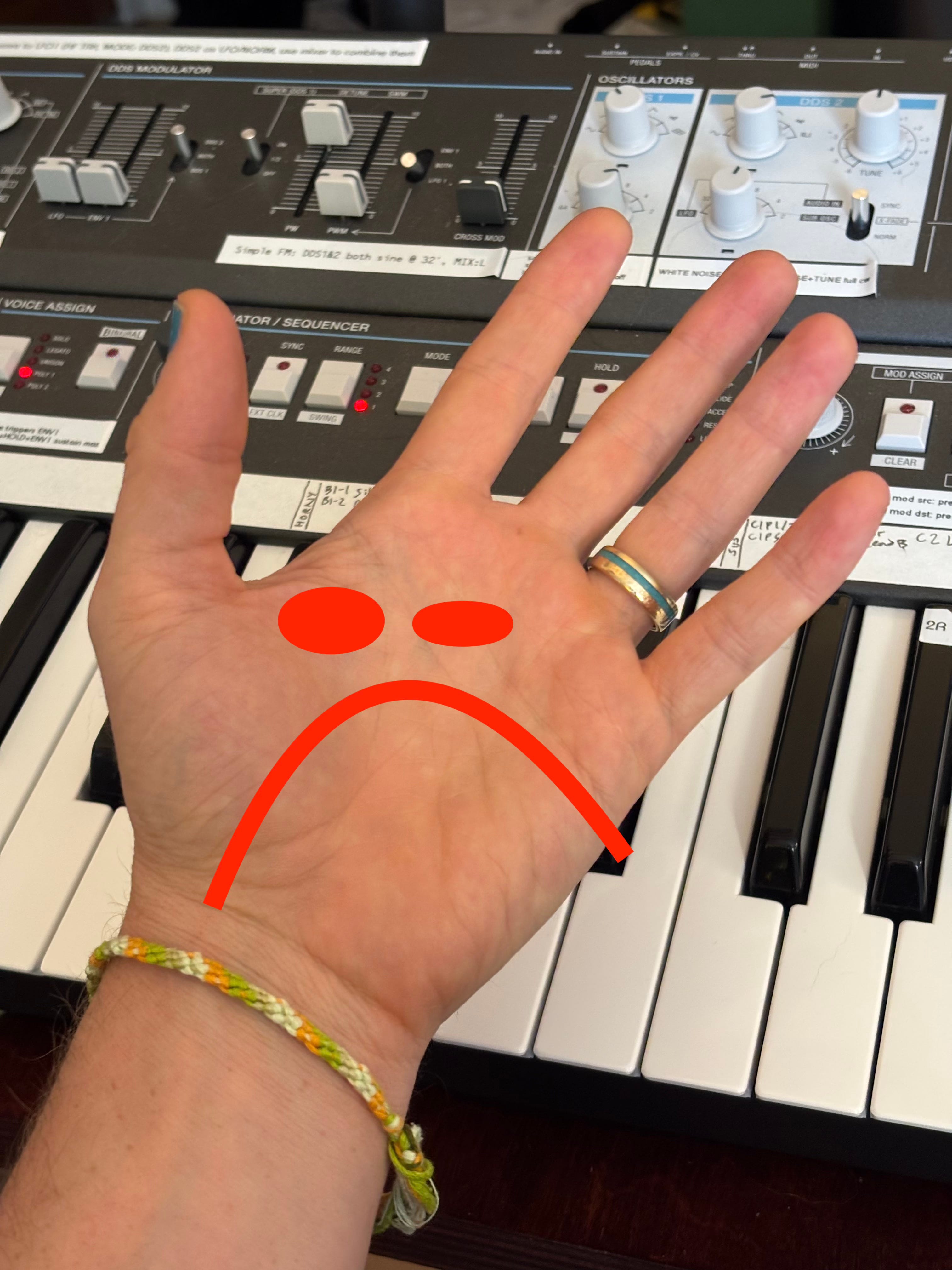
“I want to harmonize,” it says.
“That’s fine, just stay out of the way of my killer lead,” I says, finely teasing my mod lever with the side of my left hand’s thumb.
Practicing scales with the left hand just isn’t as hearably identifiable as on a piano. I figured instead I should practice harmonizing against the right hand while assuring doubtful listeners of the chord progression, like a bassline would actually do. Keep the note range restricted to harmonize the 3rd or 6th interval like Proper Counterpoint, for the hell of it, and because 8ves and 5ths are such trivially automatic hand patterns anyways, and because I like adding a medieval/renaissance/baroque flair to my living room, which is where I play.
So take off your opera glasses.
—Behold—
Lo, the synthesizer counterpoint practice sheet.
Very useful.
Yes, there are so many genres this is relevant for.
No, not just Enya or Wendy Carlos.
Before you tedium yourself with notation, let your ears guide you into…
…a taste of heavene’s harmonie…
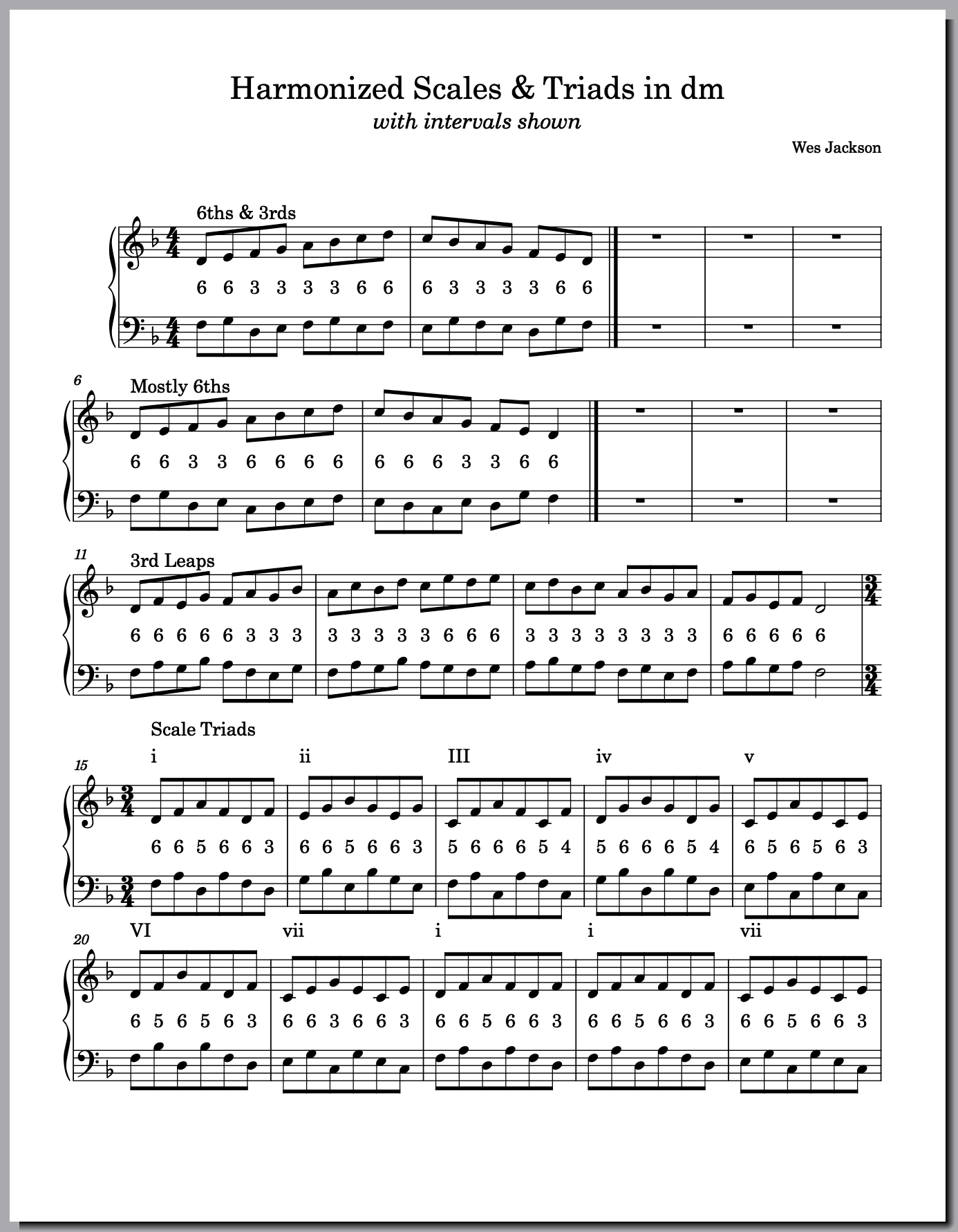
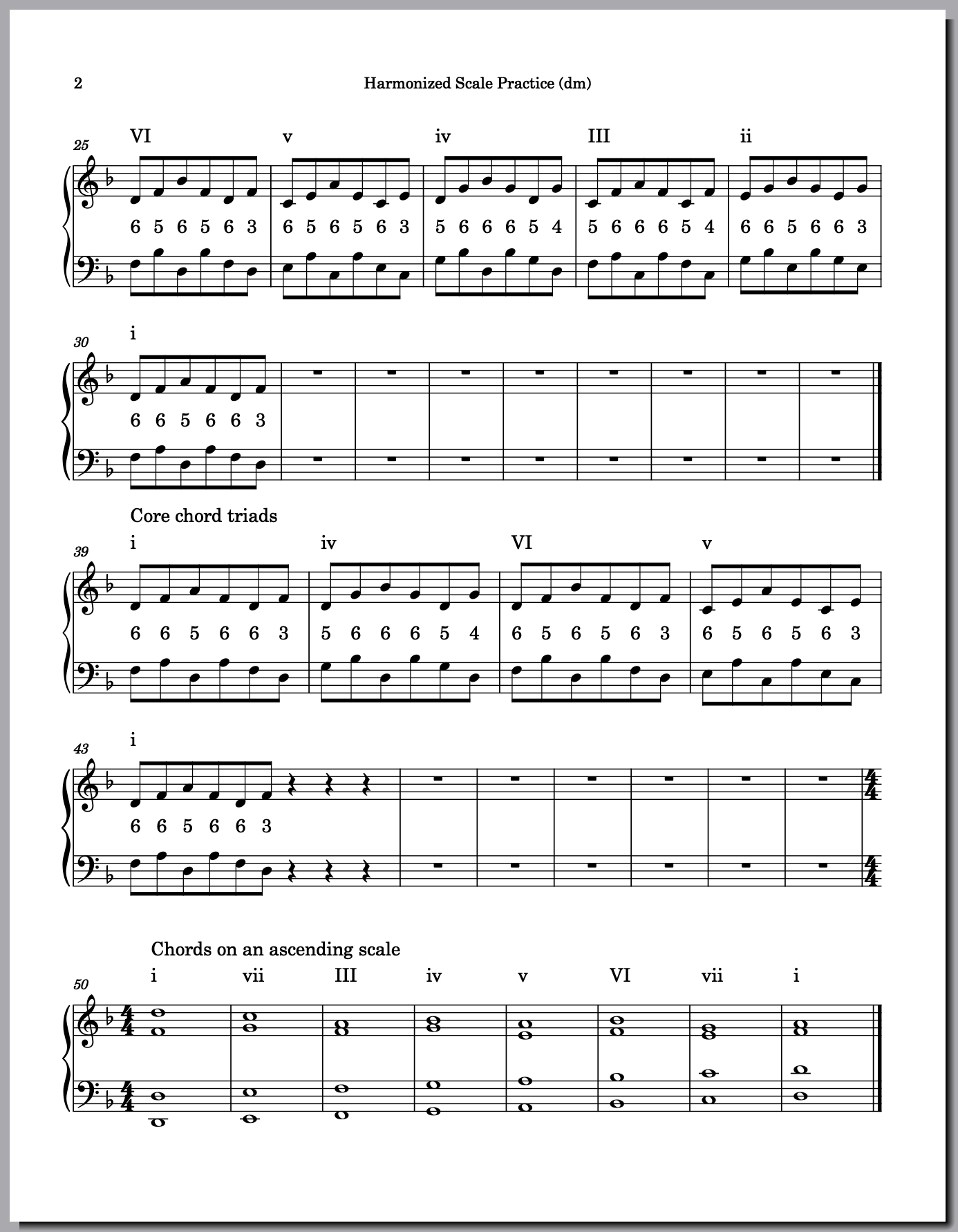
Or in PDF form.

Of course you may wince that I’m only providing the key of Dm but Substack doesn’t let me upload Dorico files or MusicXML or even MIDI so you’ll have to transpose it with your healthy brain.
Or load a Just Intonation tuning scale and never worry about key changes again!
Or depart from your audience on a platform moving just so to naturally transpose the perceived frequency of your every note by the same degree.
TLDR: just do a scale or arpeggio with the upper hand and then harmonize via whatever note below is a 3rd or 6th away (6 being whichever note is the 3rd but an octave lower) and you’ll soon be craving your very own duophonic harpsichord.
If you’re curious to learn more about mastering counterpoint, I recommend sleeping one thousand years, when you will awaken to new interactions of winds that cannot be imagined in our day, yet we sense their birth with dread anticipation of brave climactic futures, what keening will call us then into the day?
These are the harmonies you should focus on.